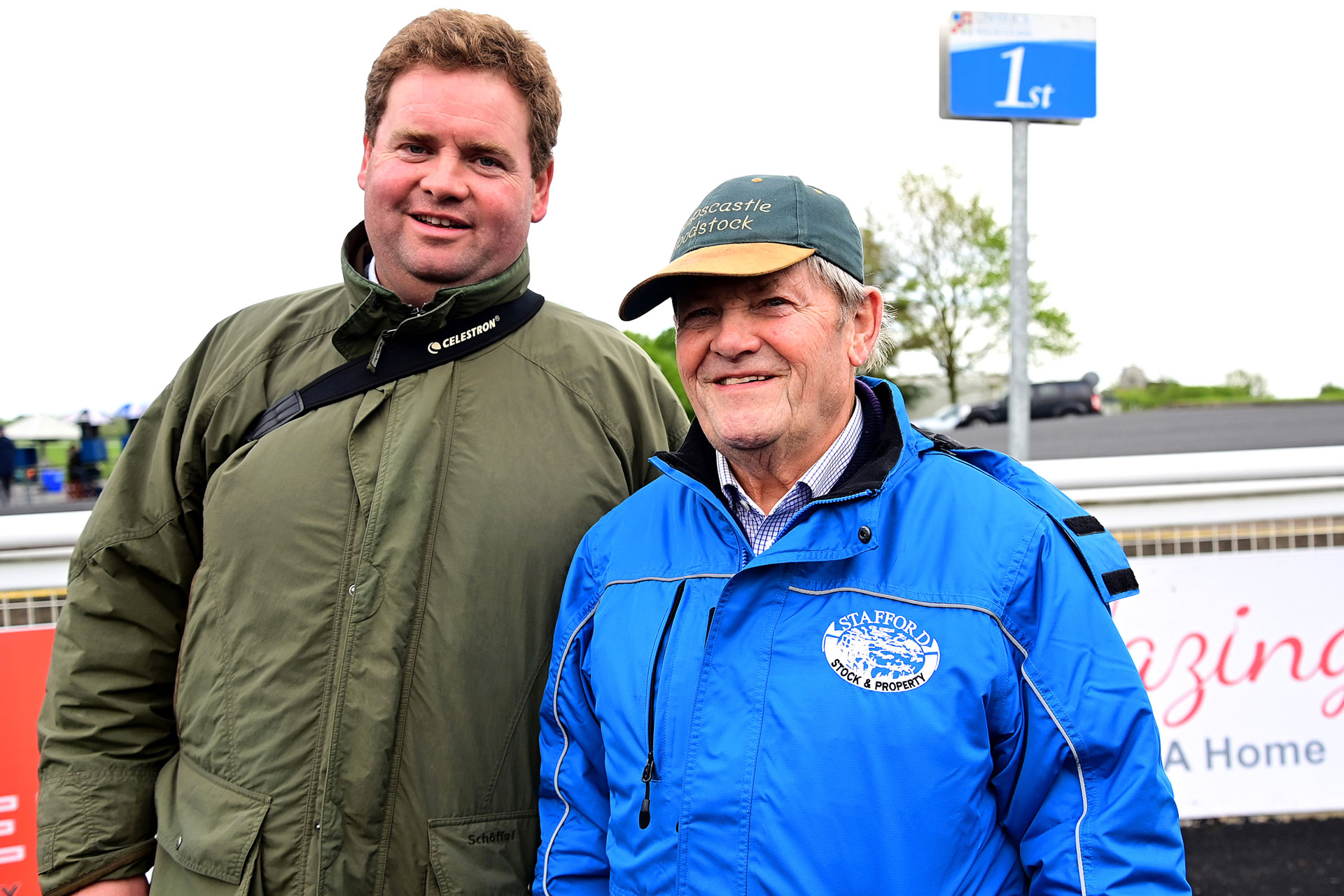
Joe & Joseph Murphy
Father & Son
Winning a first Group 1 as a licenced trainer took a little more than 90 seconds on Ascot’s verdant green turf but was 50 hard years in the making
Photos: Healy Racing • Words: John O’Brien
What they remember, four months on, is how eerily calm they felt the morning of the race. Cercene, their star three-year-old filly, had travelled to Royal Ascot for the Coronation Stakes and, true to her nature, had taken the hustle and bustle of the royal meeting in her stride. The filly set the mood.
Joseph Murphy knew she had improved since her gallant third in the Irish 1000 Guineas. He felt no nerves or pressure, just giddy expectation. If all went well, he thought, she might finish in the first three.
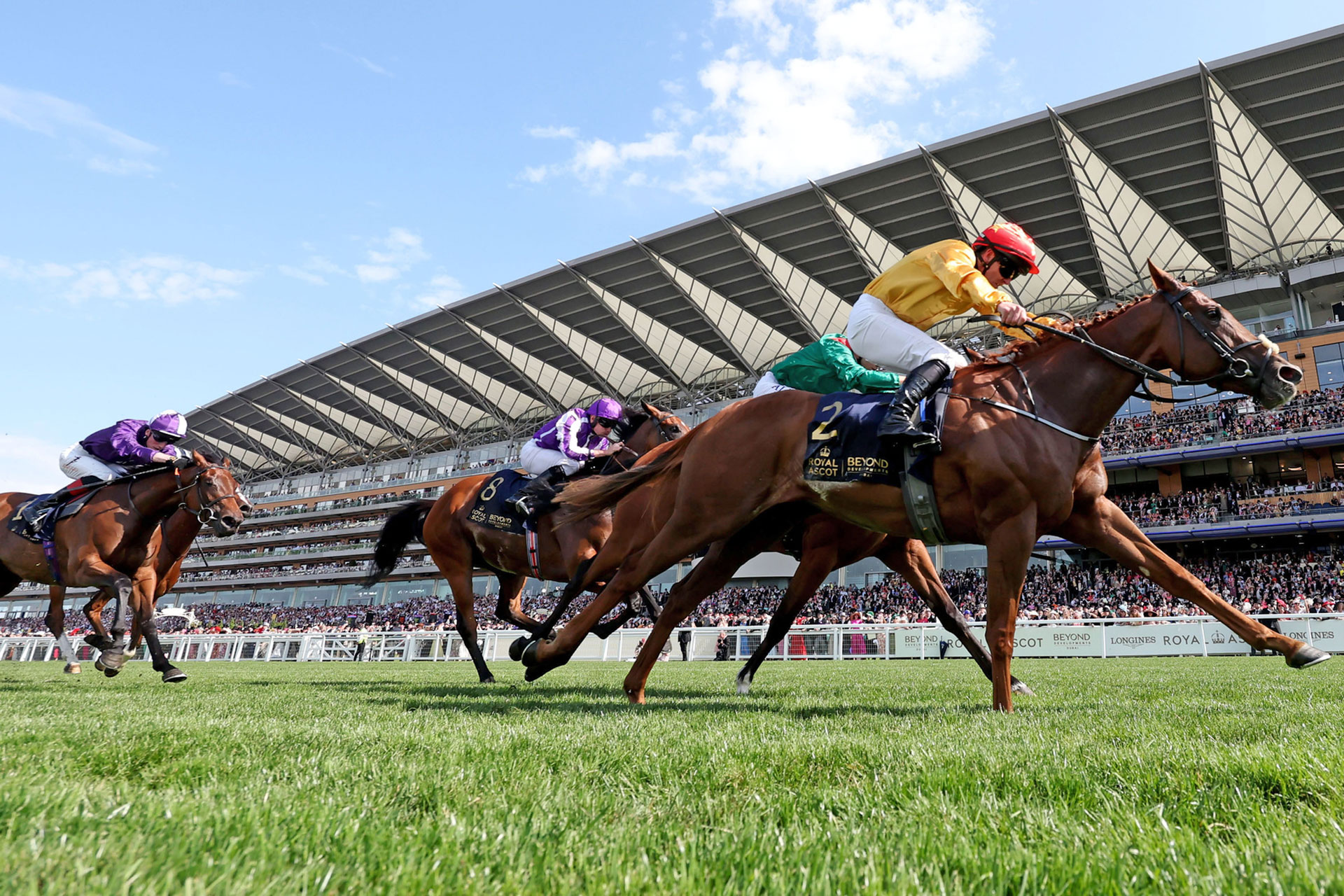
The rest unfolded like a beautifully choreographed dream. Cercene tracked the generous early pace in third, poised to strike and make her bid for glory when they turned for home. Then she was second. Then she led.
Then the big guns came bearing down: Karigana, the warm favourite in the Aga Khan silks, and the Coolmore filly, January, looking purposeful and menacing. A furlong out, Karigana poked her nose in front and the outcome looked settled. And then, the impossible happened.
Having been passed, Cercene put her head down and, under Gary Carroll’s vigorous urgings, renewed her push for the line. The French filly, faced with her rival’s grit and tenacity, lifted her head and cried no mas.
Again, Cercene stuck her nose in front. Now a head. Now half a length and the post looming. Gloriously, she had prevailed and fulfilled a lifelong dream for Joseph’s father, Joe. A little more than 90 seconds on Ascot’s verdant green turf. Fifty hard years in the making. Truth be told, the aftermath of the race only exists now as a delicious, delirious blur. “It doesn’t really sink in for an hour afterwards,” Joe says. “You’re pulled around here and there. You do what you’re told.”
“A lot of protocols to be observed,” Joseph agrees. “I’ll always remember those few seconds before the line, when you know she’s going to win. It’s an amazing feeling, indescribable really.”
You want to know about the celebrations, dizzying tales of Ascot bars drank dry, Sliabh na mBan croaked hoarsely into the night.
“A sushi bar in Heathrow Airport,” Joseph laughs. “We’d a runner in Down Royal the next day so we had to be home for that. The world didn’t stop because we’d had a Group 1 winner at Royal Ascot.”
“We’d a runner in Down Royal the next day so we had to be home for that. The world didn’t stop because we’d had a Group 1 winner at Royal Ascot”
As it happened, Vorfreude would win the Ulster Derby, which would give Joe particular satisfaction because he remembered how his colt, Northgate, a €5,000 purchase at the Doncaster sales, had been narrowly edged out by a Kevin Prendergast-trained Celtic Dane 15 years previously. Another old war wound salved. Another little box dutifully ticked.
At Ascot, the biggest one of all. How to quantify the achievement?
“It’s an impossibility,” reasons Joe, “or a near impossibility.”
That isn’t outlandishly overstating the case. In racing terms, Royal Ascot is the flat’s equivalent of the Cheltenham Festival, only with vastly greater multiples of wealth and stiffer foreign competition. And if it is getting tougher, the small man is still regarded as at least having a squeak at Cheltenham. At Royal Ascot, 33/1 winners of Group 1 races are simply not meant to happen.
Discount the names of O’Brien, Weld, Bolger and Oxx, the dominant forces in Irish flat racing over the lats 50 years, and only nine Irish trainers have tasted Group 1 success at the royal meeting in that period. Take this century and, before this year, that number reduces to two: Edward Lynam and Jessica Harrington.
And now it includes the Murphy clan from the village of Fethard, Co Tipperary, too. That was the magnitude of their achievement.
Joe Murphy hadn’t always just willed or dreamed it. He’d believed it too. Even at his lowest ebb, when winners were scarce, or when a virus struck the stable, as happened in 2018, that conviction never failed him. Every horse he bought, regardless of price, had the potential to be a Group 1 winner. That was the abiding philosophy.
“If you didn’t believe it,” he’d say, “you might as well go play golf.”
And when you dig down into it, how improbable was it anyway? He talks about another filly he once trained called Ardbrae Lady. She was by Overbury and people told Joe that Overbury progeny couldn’t have success on the flat. But Ardbrae Lady finished second in the Moyglare and again filled the runner-up spot in the Irish 1000 Guineas. On those occasions, she had been sent off 100/1 and 50/1. Common to all Joe’s horses, they never knew their starting odds.
Before Cercene, the classiest horse he’d trained was a colt called Vert De Grece. At two, he had finished second to subsequent 2000 Guineas hero, Gleneagles, and, briefly, Joe allowed himself to dream of an ambitious three-year-old campaign.
But an “offer we couldn’t refuse” arrived soon after and the horse was sold to a Hong Kong owner. Two weeks later, Vert de Grece won the Group 1 Criterium International at Saint-Cloud. So it went.
“You sold to make a living,” Joe says philosophically. “You sold to keep your family and the yard going. That’s what everybody depends on, from the breeders to the breeze-ups and the small trainers. You do what’s necessary to keep the show on the road. That’s how it is for every small stable the length and breadth of the country.”
Joe is a dreamer and a believer in a world moored by harsh economics and fiscal realities. Not unlike his father, also Joe, before him. Joe Murphy had built a hugely successful agricultural machinery business in Graiguenamanagh, Co Kilkenny, and had a habit of naming his horses after his factories or the products they made. Vicon was the first, trained by his great friend, Willie O’Grady, near Fethard. Years of success and great fun followed.
Joe imagines he was around five when his father first took him to O’Grady’s yard and the consummation with racing was instant and irreversible. After a modest spell as an amateur rider, he took two of his father’s horses that had both suffered serious injuries – Vibrax and Haybob –and nursed them back to health and the winners’ enclosure. With winnings earned from Haybob, he bought the land where he continues to train today.
“I’ll always remember those few seconds before the line, when you know she’s going to win. It’s an amazing feeling, indescribable really”
He was a jumping man to his core, to the very marrow of his bones, but he figured he’d seen enough Cheltenham prospects go wrong to last him a lifetime. Maybe a certain madness had gripped him, but he began to conceive of a life buying and training for the flat.
“What I’d learned was nature goes with you on the flat. You’re racing in summer, you’ve a longer day. The risk factor is taken out by the elements. Like, you’re a small jumps’ trainer, you’ve one or two good horses and you find they’ve a joint or a leg, that’s you gone for another year. And I could see the way it was going with Willie (Mullins) and Gordon (Elliott). I felt the percentages were getting less and less.
“The other big thing was the turnaround. With jumps, it’s a two- or three-year turnaround. Whereas, if you bought a yearling in September, you could be running six months later. So you could get the owners to the races a lot quicker and you’re getting rewarded quicker.” Initially, the revised business plan just ticked over. They got by.
“There were tough times,” Joe concedes. “But if you got €20,000 for a horse, it was a lot. The money went further back then.”
Bit by bit, they turned the corner. In 2009, Joe sent out 12 winners and that was more than the previous eight seasons combined.
“The main reason that happened is sitting beside me here,” Joe says, pointing to his son. “He came back from America in 2006 and brought a whole new focus. In terms of planning, he brought us to another level.”
The simple trick was sourcing enough horses to exceed their modest purchase prices and they became more and more adept at it. For the past 20 years the formula has seen a glut of talent regularly leave their Crampscastle gates to scoop big prizes in racetracks all over the country: Gustavus Weston, Ardbrae Lady, Euphrasia, Swamp Fox, Insignia Of Rank, Lord Massusus, Flying Fairies.
And Cercene? At €50,000, she was at the top end of their budget, but not excessively so. They remember leaving the Tattersalls Sale that day in September 2023, happy they’d acquired a nice filly, nothing more. The first thing Joe had noticed was her attractive pedigree, then he was struck by how small she was. It didn’t unduly bother him, though. If anything, it would deter bidders with deeper pockets.
“I meant it when I said (before that) she really bought us,” Joe says. “Myself and Joseph were on the same page. When we saw her walking, we didn’t even speak a word. We just nodded at each other. We both knew. If she wasn’t good enough, she’d still have value with her pedigree. She made sense for us. Ticked all our boxes.”
A few months later, they brought her to the Old Vic gallop on The Curragh and it confirmed she had more than just breeding potential. A debut third at Gowran Park and an authoritative maiden win at Naas suggested a serious level of ability. With Cercene, each step forward was a voyage of discovery because she was one of those horses who showed little enough at home, reserving their A-game for the racetrack. In other words, every trainer’s dream.
And that, of course, presented the age-old dilemma: to have a horse good enough to tackle the most valuable races, yet not so good it won’t be sold at the earliest opportunity.
“When she won her maiden, there was a lot of interest from America,” explains Joseph. “Being honest, we’d have been quite prepared to take the money at that time. But we were lucky that Shane (Stafford) had come on board after Gowran and he was willing to reinvest that value. Ninety-nine per cent of the time, it doesn’t work out that way.”
“You sold to make a living. You sold to keep your family and the yard going”
Joe has known enough disappointment over the years to truly savour the one per cent when it comes along. In October, Marjorie Daw, a €28,000 purchase as a yearling, won her maiden at Gowran and she excites them for next year, a possible tilt at an Oaks’ trial already in their minds. And they’ll have Cercene to race for another year too before she heads for the sales and a life in the breeding shed. Bliss beyond their wildest dreams.
She mightn’t have changed their lives, but the warmth and goodwill that flooded in after Ascot overwhelmed them, the joy and pride it brought to the whole village of Fethard. Had he lived, Joe wonders what his father would have made of a “Tipp man receiving a trophy from a king,” but he knows he’d have been proud beyond words.
Joseph reminds him of the nomination he received for Tipperary Sports Star of the Month, for which he seemed a shoo-in until the county hurlers galloped to an unforeseen All-Ireland title. And that’s how it was: a summer of Tipperary shocks.
After Ascot, Joe had sat down with Brian Sheerin of the Thoroughbred Daily News and explained how the lack of Group 1 success had gnawed away at his soul.
“Fuck it,” he’d said. “I’m after living my life and I’ve nothing to show for it.” It was a brutally harsh, unforgiving self-assessment, but Joe had turned 70 and it just seemed a natural time for introspection and hard home-truths.
“The best way I can describe it,” he says now, “it feels like we’re from Tipp with an All-Ireland medal in our back pockets. Like, there’s nothing wrong with finishing second or third in a Group 1. It’s still accepted that you have achieved something. But the pinnacle is if you’ve at least one All-Ireland. It’s remembered forever in the annals of the sport. It’ll be remembered in time that we won the Coronation Stakes in 2025.”
And nothing can ever take that away from them.