
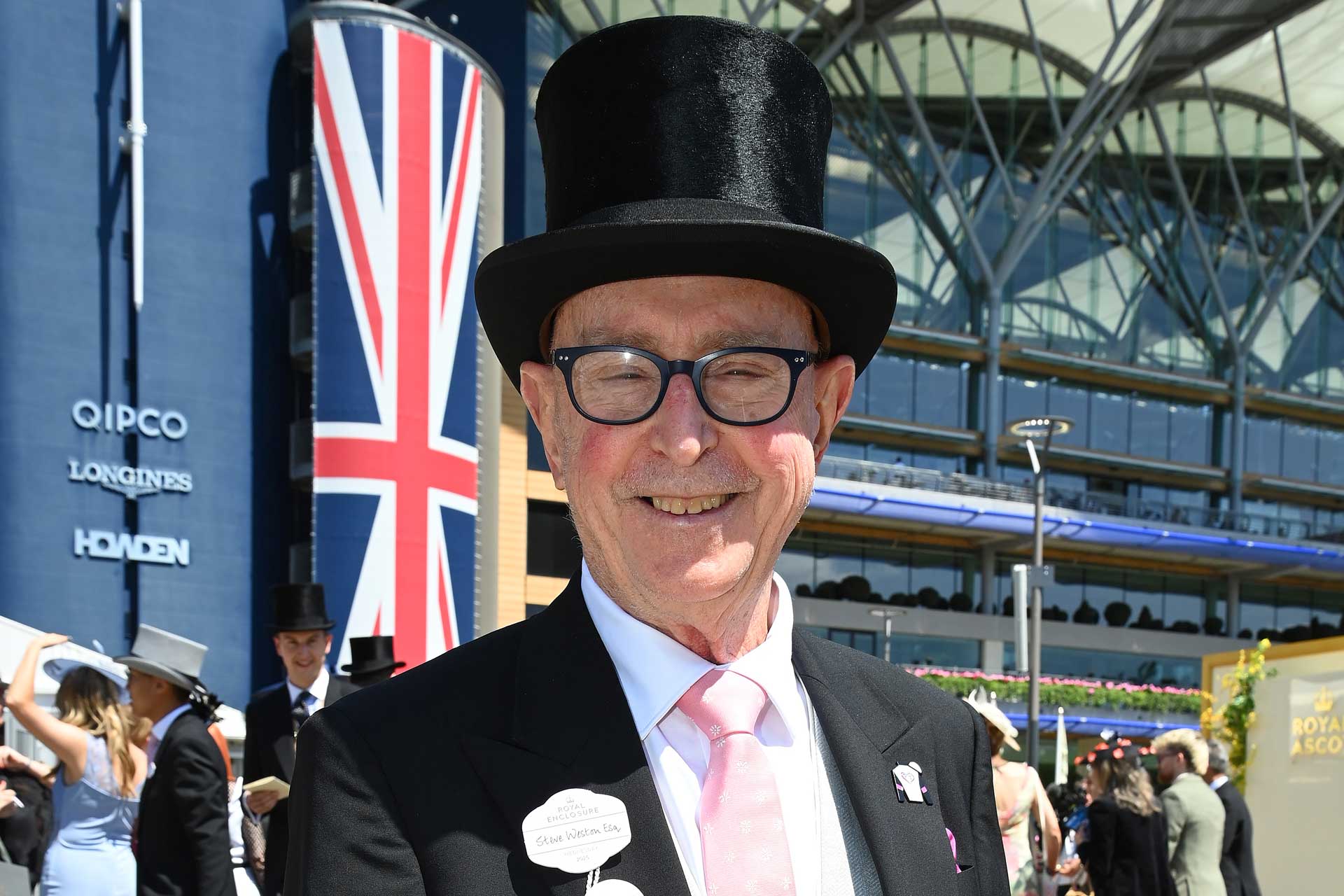
Steve Weston
The Irish Experiment
Florida-based Brooklyn native, Steve Weston has found the perfect alchemy to realise his racing dreams, with the ingredients rooted in Ireland
Photos: Healy Racing & Peter Mooney • Words: Daragh Ó Conchúir
Steve Weston and his wife Debbie must count their blessings every day for their decision to get into racehorse ownership and in particular, for linking up with Irish racing and the brilliant young trainer,
Donnacha O’Brien. The latest dividend is a share of the 4.5m guineas accrued from the Tattersalls Newmarket December sale of Porta Fortuna, a quadruple Group 1 winner under the tutelage of the youngest member of the O’Brien training triumvirate. Porta Fortuna was also second in three other top-flight races (falling just a neck short in the 1000 Guineas) and third in another.
The Caravaggio filly only finished outside the top three in one of her 13 outings but was restricted to just the solitary race as a four-year-old in 2025, when triumphant at Group 2 level, her eighth victory in total.
Weston owned the Cheveley Park, Coronation, Falmouth and Matron Stakes victress in partnership with Medallion Racing, Reeves Thoroughbred Racing and Barry Fowler. The partnership model is one he favours to facilitate his desire to be a protagonist at the highest level.
So too is the gender of his horses, multiplying considerably the possibility of at least cashing out, and sometimes cashing in.
When participating in this transatlantic conversation, it is early morning in Florida and Weston has just returned from Kentucky. The previous night, Lush Lips, the US Grade 1 winner he owned in partnership with Medallion, Hoffman Racing, Emily Magnier (wife of Coolmore guru MV, who bought Porta Fortuna) and Linda Shanahan (wife of Paul, also of Coolmore), and trained by another Irishman, Lexington-based Shanagarry native Brendan Walsh, was sold for $3.7m at Keeneland.
The adrenaline is still flowing through his veins. He is also still basking in the glow of Balantina’s Breeders’ Cup Juvenile Fillies’ Turf success at Churchill Downs five days ago, the two-year-old having been prepared expertly by O’Brien and ridden so enterprisingly up the inner by Oisín Murphy.
This was particularly sweet given Porta Fortuna’s half-length defeat in the 2023 renewal at Santa Anita, a close call that remarkably came just 40 minutes after Jody’s Pride, which Weston bred, was touched off in the Juvenile Fillies’ Dirt.
“It’s a dream I’ve had for a number of years,” says Weston of his maiden Breeders’ Cup victory. “You know, first of all, I wanted to have a horse in it, and I’ve had a few, and I got closest a couple years ago with a homebred called Jody’s Pride, but boy, oh boy.”
“People outside racing or who watch it occasionally, have no idea what it takes to win one of these… but I was just on cloud nine
He describes Balantina’s story as “amazing,” crediting O’Brien and Mark McStay for picking the Ten Sovereigns filly out and buying her from Camas Park Stud for a relatively inexpensive €100,000 at Arqana’s August Yearling Sale.
“I had her myself and I brought in Dean Reeves, because he went to Tattersalls to buy a horse and I said, ‘If you want, we’ll throw them together, and maybe we’ll have something.’ And just a few weeks (before the Breeders’ Cup), I asked Phil Shelton from Medallion if he would like to buy a piece of her.
“I said, ‘I don’t think she’ll get in the Breeders’ Cup, but we’ll try, and if we don’t get in, we could run on the undercard. And that was the plan. And then Oisín turned the whole script around.”
It was notable, however, that the Curragh maiden winner’s name was coming up as a live outsider (she went off at 206/10), despite disappointing in the Group 2 Debutante Stakes. She had been just denied a short head at Group 3 level prior to that on her return to Deauville, having run a cracker to be third in behind Venetian Sun in the Albany, previously won by Porta Fortuna, at Royal Ascot.
“We thought maybe she could hit the board. Maybe she could get a cheque. I didn’t think she would win, especially coming out of the 10 hole. And I know she doesn’t break great – most of the Euros break half a step slow as we know.
“Do you remember (in 2021), Jose Ortiz had a horse called Pizza Bianca? In the same race (at Del Mar), he did exactly what Oisín did. He was somewhat near the rear and sort of weaved his way through and came up the rail; it was sort of like an exact copy.”
Turning 80 on his next birthday, Weston admits his eyesight isn’t what it used to be, so he watches the board until the horses come up the straight. He describes the growing excitement as the number 10 began to move up through the field. Initially, it was relief she wouldn’t bomb out completely. Then it was that she is going to run a big race.
“And then I lost her, okay? And then my wife starts screaming, yelling, ‘She’s coming! She’s coming!’ you know? And I can’t find her. And Oisín went into the rail again. Then I picked her up when she was almost in front of us, and it was, ‘Oh my god.’ And then I got emotional.”
As he recounts those closing moments, that depth of feeling is evident in Weston’s voice once more. And it is because he understands how difficult it is to win on this stage. He studied the stats, saw how some of the best jockeys in the world found success eluding them, or rare, at the Breeders’ Cup.
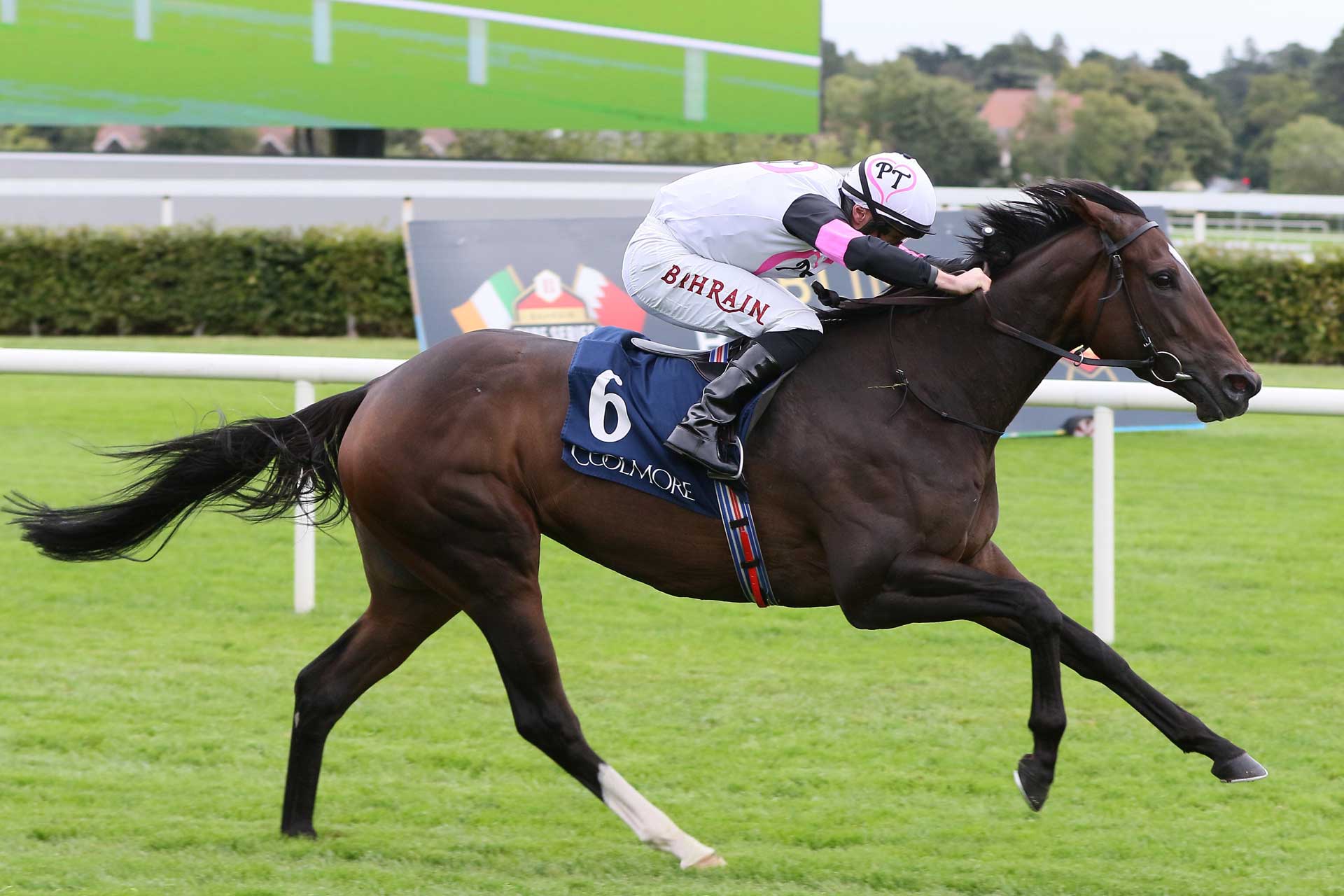
Porta Fortuna
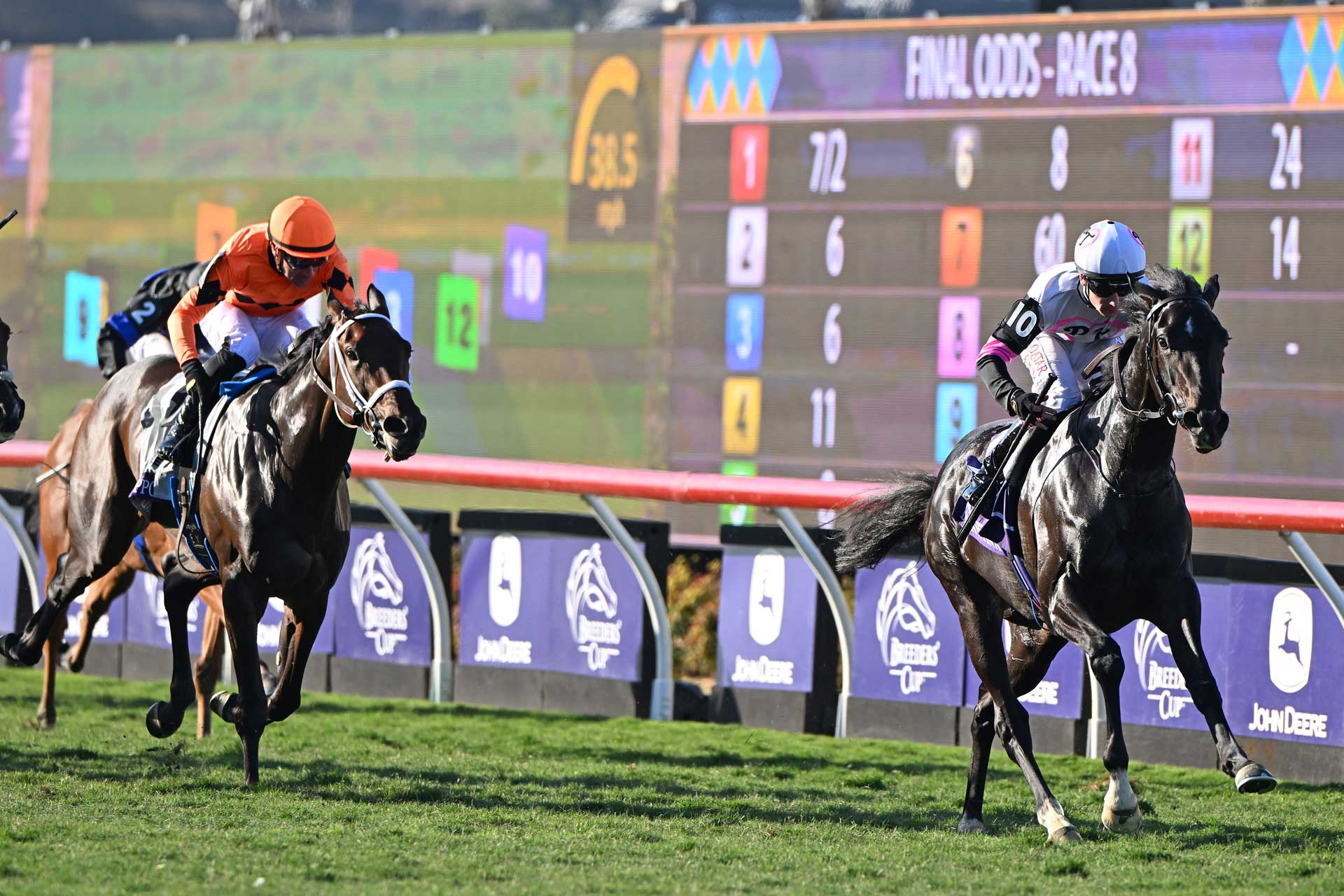
Balantina
“People outside racing or who watch it occasionally, have no idea what it takes to win one of these. And the owner really has nothing to do with it, other than putting up the financial end, but I was just on cloud nine. “I felt I was so part of this filly because we bought her as a yearling, and I became somewhat friendly with Oisín. I sort of followed his career and then I WhatsApped him and congratulated him on what he’d won in Asia and everything else.
“And so I contacted Oisín, and I asked him originally, when she ran her maiden, if he was going to be at the Curragh and if he could ride. He said he was and that he would be delighted and she won.”
As a contracted rider and with huge demand on his services, there were no guarantees about the Kerryman’s future availability, however, which everyone understood. Weston laid the groundwork, however, just in case, and sounded the champion jockey out about the Breeders’ Cup. About six weeks beforehand, Murphy committed to wearing the distinctive silks if she got into the race and O’Brien gave his former Ballydoyle colleague his blessing.
“He was incredible,” says Weston glowingly. “He won the race. Sure, the horse has to win the race but without his ride, it just would not have happened.”
The Brooklyn native’s first link with Irish racing was when buying an expensive horse that failed to fire in America. It was a lesson learned. Around the same time, he had gotten to know former Taylor Made Farm stalwart, Phil Shelton, who had established Medallion Racing.
They were looking for the next opportunity, watching European races early in the morning, when Porta Fortuna scored at the first time of asking on heavy ground at the Curragh, under Gavin Ryan.
They got on the phone to the owner-breeder – none other than the trainer’s mother Annemarie, who was, of course, the first woman to be champion jumps trainer in Ireland before transferring the licence to the name of her husband. Aidan O’Brien would break the record as the most successful trainer in Breeders’ Cup history in 2025. This time, Weston, and his partners, decided to leave the horse at home, in Donnacha’s Tipperary yard, with the view to getting her over for the Breeders’ Cup at the end of each campaign.
“Donnacha is a pleasure, just a pleasure, to be with. You know, the apple doesn’t fall far from the tree. He’s a lovely young man to deal with, and easy to talk to. And he’s a wonderful trainer to use.
“I don’t think there’s any reason to run over to Europe, buy a horse and bring that horse to America. I think if they do well, buy them in Europe, let them run there, okay? And if they’re good enough to compete at the graded level, that’s fantastic. And if they’re not, then maybe, late in their two-year-old year, or maybe early in their three year old year, you might bring them to the States, because the purses are such that you can’t break even in Europe below the graded level.
“But let them develop a little bit, let them grow up and see what their abilities are, before you rush into sending them to America.
“The horses have a better life in Ireland and England. They’re not gypsies. They don’t go every couple months to a new home. And also the fact that they have longevity being in Europe because of the surface that they train on, they’re not pounding on the dirt every day.”
There are more chances to get group form on the page as a juvenile in Europe than America too, but that is just a final bonus. What is not an accident is Weston’s focus on fillies.
“The money is not always in the purses but with fillies, the pot of gold is sometimes at the end of the rainbow, where the breeding is more important than the prize money.
“I don’t think there’s any reason to run over to Europe, buy a horse and bring that horse to America”
“When I first got into this business about 12 years ago, (bloodstock agent) Mike Ryan had said that to me, that fillies had that residual value that 99 per cent of colts do not have.”
“Horse of a lifetime” Porta Fortuna and Lush Lips are the two prime examples of that, and regardless of what she does now, Balantina will realise a considerable profit when the time comes for her to transition from racing to breeding. But there is a road to travel before then, hopefully.
“We sent her back with Donnacha, and hopefully, we’ll compete against Aidan in the Guineas probably… it’s the same pattern as what we did with Porta. We’ll probably go to Newmarket in May, then maybe go to Royal Ascot for the Coronation. It’s incredible to even think that we can follow the same path.
“But it’s been phenomenal for an old man like myself. I’m busy, I’m doing things. I tell my friends that are not really racing fans - but they’re sports fans - that this is like owning your own professional soccer team, rugby team, basketball or baseball team here in the States, or (American) football.
“You’re the general manager, you’re the owner. You have to get players. You have to trade players. You try to better your team all the time. Being a horse owner at this level, it’s incredible that you have your own team. You’re not the trainer, you’re not the coach, but you’re sure involved in the team all the time. It’s what we always wanted, as kids, to own a football team. Well, I sort of have my own football team.”
A team with a very Irish twist indeed.