
Johnny Murtagh
The Rising Tide
A former great of the saddle, Johnny Murtagh is now growing a world-class training operation while contributing to the wider promotion of horse racing and the health of its younger constituents in particular
Photos: Caroline Norris • Words: Ian Gaughran
As Johnny Murtagh reflects on his illustrious career, it is clear that his legacy extends far beyond his achievements as a jockey and trainer. The 55-year-old is fast becoming a driving force in shaping the future of Irish racing, leaving an indelible mark on the sport through his commitment to excellence, his passion for nurturing young talent, a holistic approach to the industry and refreshingly honest opinions on the promotion of the sport.
“My legacy? Constant thought of others. I’d like to think I was always there to help people in need.”
Murtagh’s own words indicate his priorities and they are long and well established within the industry. He is passionate about helping the next generation in particular and using his experiences to provide mentoring, not just in his own yard, but on a wider level, having collaborated with Irish racing administrators in this area for many years.
He has done this without impacting on his business. His most recent season as a trainer, his best to date with 56 winners and close to two million in prizemoney in Ireland and Britain, has only served to cement his reputation as one of the most respected figures in the game. With three successes at the prestigious Irish Champions Weekend, Murtagh’s Curragh-based operation has firmly established itself as a force on the biggest stages.
“The year was unbelievable,” Murtagh reflects. “It started good and it just kept going. The horses ran very consistently, and they were very healthy all year.”
Murtagh’s success is no fluke. He has spent years meticulously building his operation, from his excellent facilities on the Curragh to the tight-knit, energetic team that surrounds him.
“I’m a positive person and it starts at the top,” he explains. “So, if you’re positive, I suppose the people around you are going to be positive. So, no matter what’s going on, you still have to be that way, you know? As I said, we have a system here in place now. It’s built up over the years and I’m very proud of it.”
That system has clearly paid dividends. Murtagh’s horses have become a fixture at the biggest meetings, with the trainer targeting those big meetings as the focal points of his season. “The evidence is in place now. We just need to keep the standard high. We always look to improve and evolve because the season has ended and everybody’s back to zero now.”
Of course, maintaining that high standard is no easy feat. One of the biggest challenges Murtagh faces is acquiring the right horses to train. In an industry where a select few owner/breeders have the top-class bloodlines, securing the best equine talent is a constant battle.
“We just need to be getting those,” Murtagh says, referring to the elite horses. “From a facilities and staff perspective, everything is there – I train on The Curragh, brilliant facilities. We just need to be getting those top-level horses. Realistically, to compete at the highest level, I’d need 50 two-year-olds coming in for the next season – that’s how competitive it is now.”
“It’s a thin line, but I’d rather have someone saying, ‘Piss off,’ and ‘Mind your own business,’ than you having not asked them and then be wondering if you could have helped them”
Murtagh has forged a strong relationship with one of the most prestigious owner/breeders in the game – the late Aga Khan. This connection has provided him with a steady stream of quality horses, but he also casts his net wider. We speak after he has spent a day at the sales, buying horses on spec, with prices ranging from €20,000 to €150,000.
It’s a high-risk, high-reward strategy, but one that has paid dividends for Murtagh. His ability to uncover hidden gems and develop them into top-class performers has earned him a reputation as one of the shrewdest judges in the game.
“When you’re buying them, for a bit of craic, with a budget of 30 grand, for example, you don’t really expect them to end up being listed horses, you know? But when they do it’s very satisfying.”
One such example is the filly Onemoredance, who Murtagh acquired for a modest €30,000 and went on to win at listed level last season. “It’s not often in Ireland you win five in a season. She was initially a low-grade handicapper, but in fairness to her, she’d done nothing but improve right through the summer and, winning the listed race last week was the icing on the cake.” Interestingly, Onemoredance is owned by Ciarán Kilkenny, Dublin Gaelic football legend and fierce rival of Murtagh’s home county of Meath. Despite the sporting rivalry, Murtagh has forged a strong relationship with Kilkenny and his syndicate members, who have become passionate owners in the yard.
“My father-in-law, Babs Keating is from Castleknock and he introduced us. Ciarán came down on a couple of mornings and watched the horses out in the gallop. We developed a kind of relationship since then. And then he got a few of his buddies and they got Daamberdiplomat, who has been a revelation, as has Onemoredance obviously.
“And after all those years of the Dubs looking down on Meath – they can’t buy a winner unless they go down to a Meath man!
Seriously though, the excitement and the buzz Ciarán got out of it. I keep saying to people, that’s what racing does to people.
“It gives you that buzz. There’s a lot of days you’re disappointed and you walk in off the stand thinking, ‘Gee, what if?’ You know that kind of way? But on the days that things like that happen with Onemoredance, it’s brilliant. As I said, to see him there that day and to see the excitement he got – and how he still talks about it, it’s that kind of thing that makes the sport so special.”
Murtagh’s ability to uncover and develop talent extends beyond just the horses. He has also made a concerted effort to provide opportunities for young jockeys, recognising the importance of nurturing the next generation of riding talent. Case in point being Ben Coen.
“Ben is very good. He rides out here most mornings and knows the horses very well. He doesn’t say very much, but when he does, you have to take it on board. He’s a good judge, he’s great at the races, good in front, can hold them up, good from the back – I think he’s top class.”
Murtagh’s commitment to young riders is notable. Drawing on his own experiences as a jockey, he is keenly aware of the mental health challenges faced by those in the saddle, and his staff. “I’d like to think people enjoy working for me. I’d like to think it’s a good place to work because the vibe is good and there’s a lot of young people that work in here too, which is good. You can see there’s a good old buzz around the yard every morning.”
Murtagh maintains an open-door policy, encouraging his staff to come to him with any issues they may be facing. “I’d like to think they could come to me and speak to me about anything. And I’d do my best to help them in any way I could.”
It’s a philosophy that extends beyond just his own yard. Murtagh is a vocal advocate for better mental health support within the industry, drawing on his own experiences to highlight the pressures and challenges faced by jockeys.
“I know what it’s like. I know what it’s like to be sitting in the sauna, sweating away. I know what it’s like to be abused by people. Maybe not so much online in my day, but walking out after a race.
“When I was riding, you’d hear it being shouted at you maybe at the track if you’d been beaten on one but these days, with so much of our lives being lived online, jockeys are an easier target – it’s terrible. And you’d encourage young riders not to look at it or not to pay attention to it but that’s easier said than done – it’s very hard to avoid.
“You know what people are saying and then you probably make it worse in your own mind, almost asking yourself what people are saying. It’s a small minority, but they can affect you, they really can. Racing is a hard game, no matter what part of it you’re in.
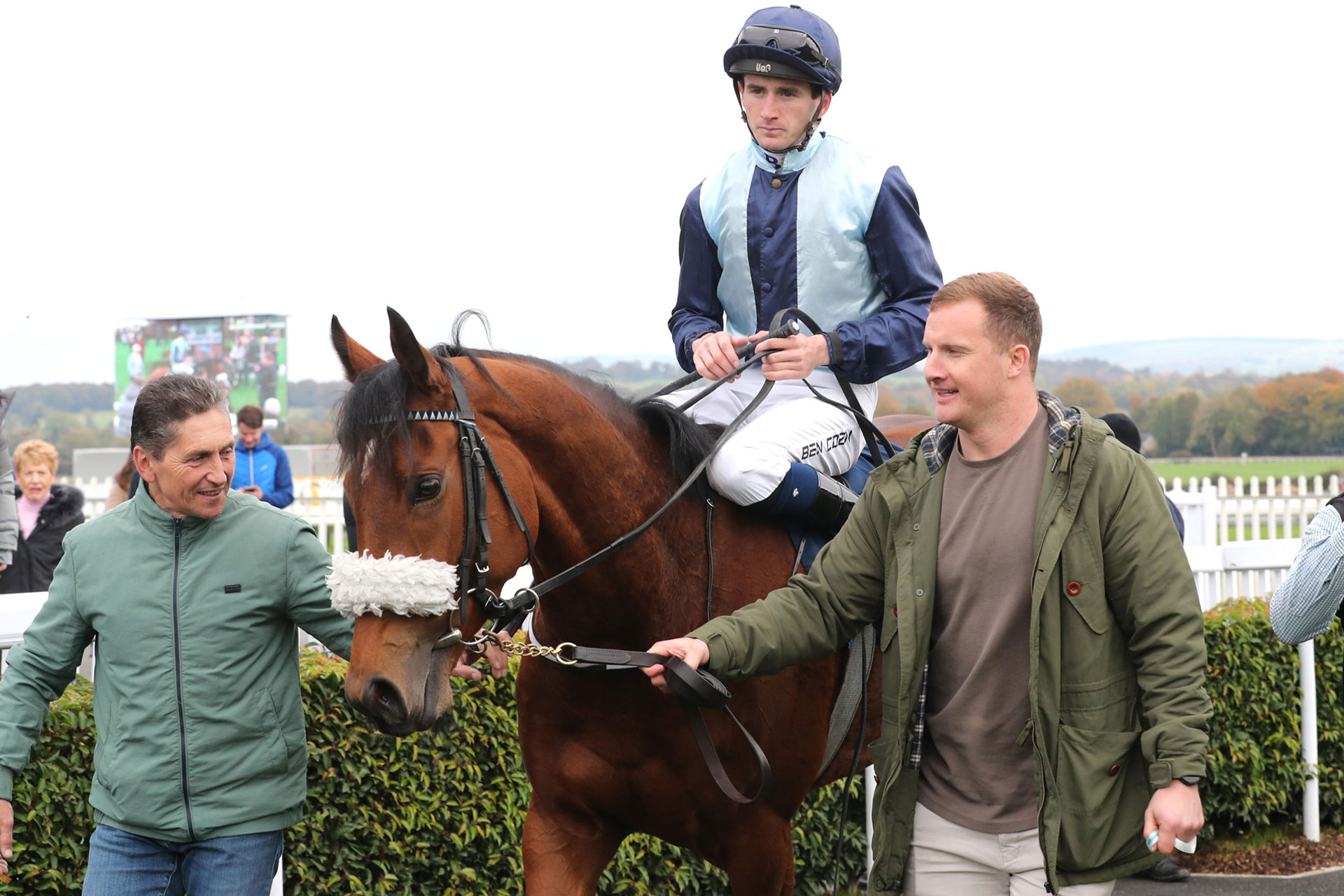
The joy Onemoredance’s development has given her owners, including Dublin Gaelic football legend Ciarán Kilkenny, emphasises the attraction of racing that Murtagh believes needs to be highlighted more
“It’s a very hard game. And the weigh room, you know, is a brilliant place but it’s a harsh place too. The lads, they’re all friends in there but it’s a very, very small pie and everybody wants a piece of that pie.
“You just look at England, (the) young jockey Tommie Jakes (who took his own life, aged 19). You know what I mean? That was terrible and you think it should never happen, but these are the things that are going on.
“And I suppose I always say that you need to try and identify these things before they happen. A young lad that’s sitting on his own in the corner, maybe he’s just off a little bit. Maybe you’d think you should have said something to him there at that time.
“But you sometimes need to be very careful walking up to somebody and saying, ‘Are you okay?’ You know, telling someone you think they need help – you never know how they’re going to react to that.
“So, it’s a thin line, but I’d rather have someone saying, ‘Piss off,’ and ‘Mind your own business,’ than you having not asked them and then be wondering if you could have helped them. “I was one of the lucky ones, I had a great career, but my door is always open for anybody to talk as I say to my lads, and I have loads of young people working here who I’m hard on and I know I’m hard on them. But at the end of the day, I’d like to think they could come to me and speak to me about anything.
“And I’d do my best to help them in any way I could.”
Murtagh’s commitment to the sport extends beyond just the confines of his own yard. He is deeply concerned about the lack of mainstream media coverage and promotion for horse racing, particularly when it comes to highlighting the positive stories that abound within the industry.
“We’re living in this world where we think we’re... Like, there’s probably people getting a lot more money than you and me to promote it,” he laments. “So, what are they doing?”
Murtagh points to the lack of social media engagement around major events like Irish Champions Festival as a prime example of the industry’s failure to capitalise on its own success stories. “I wasn’t tagged in one thing about Champions Weekend (its former title). I wasn’t tagged in anything. Because anything I do, I retweet it. Positive stuff, good stories, especially about racing, I retweet it. I didn’t retweet anything because there was nothing to retweet.”
He believes the industry needs to take a more proactive approach to highlighting the sport’s many positive narratives, from the excitement of owners like the Dublin GAA contingent he has partnered with, to the feelgood stories of horses like Onemoredance overachieving against the odds.
“Selling papers and all that, there are a lot of good stories and we probably are our own worst enemy. We don’t promote that enough in racing.”
Murtagh is particularly frustrated by the tendency of the media to focus on the negative aspects of the sport, rather than highlighting the many heartwarming tales that unfold on a regular basis.
“They’re lazy. I listened to the news this morning. Last thing, always the last thing: ‘And there’s racing in Leopardstown today’’. On the news, nothing mentioned about it.”
It is clear that Murtagh’s commitment to the sport extends beyond just the racing itself. And his holistic approach extends to his relationships with owners as well. He places a premium on open and honest communication, even if that means delivering tough messages.
“I’m very honest with them, whether it’s good or bad. Some of them like it and some of them don’t, but we want to keep the standard up. If I don’t think there’s an end product, you know, potential for a good result, I just tell them I don’t think this horse is good enough to be in training with us.”
“When you’re buying them, for a bit of craic, with a budget of 30 grand, for example, you don’t really expect them to end up being listed horses… but when they do it’s very satisfying”
It’s a philosophy that has earned him the respect and loyalty of his owners, many of whom have been with him for years. They know that Murtagh is not just in it for the training fees, but for the genuine desire to see their horses reach their full potential.
“Good horses for nice people and for them to reach their true potential. If I’m training an 85-rated horse, I always want it to run to an 85 rating.”
As Murtagh reflects on his career, it’s clear that he has no intention of resting on his laurels. The fire that drove him to success as a jockey still burns brightly, and he is determined to leave an even greater legacy as a trainer.
“My ambition is to win all those races I won as a jockey,” he says with a bullishness.
“Because people say flat jockeys don’t make great trainers, and that gets me going even more so. So, I suppose, I was a brilliant jockey, but I’m going to be an even better trainer.”
It’s a bold statement, but given Murtagh’s track record of success and his unwavering commitment to the sport, few would bet against him achieving it. As the Irish racing industry looks to the future, Johnny Murtagh stands as an example of what can be accomplished through a relentless pursuit of excellence, a deep-rooted passion for the sport, and a genuine concern for the well-being of all those involved.
And by bringing the likes of Ciarán Kilkenny and his Dublin GAA mates into the fold, his impact on the sport could extend far beyond the confines of his own yard, helping to bridge the divide between the traditional racing establishment and the wider sporting public.
In an industry often consumed by the pursuit of glory and riches, Murtagh’s unwavering focus on nurturing talent, promoting the sport, and creating a positive, supportive environment sets him apart as a true visionary – one whose impact will be felt for generations to come.
As the Irish racing industry looks to the future, Johnny Murtagh’s legacy stands as a beacon of hope, a testament to the power of passion, perseverance, and a genuine commitment to the sport and the people within it. Whether it’s unearthing the next equine superstar, mentoring the next generation of jockeys, or championing the positive stories that too often go untold, Murtagh’s impact is undeniable – a legacy that will continue to shape the face of Irish racing for years to come.
“Constant thought of others. That’s the one,” Murtagh says, summing up the essence of his legacy.